


Counterfeit Funko POPs are everywhere, preying on collectors with tempting prices and convincing imitations. Spotting a fake can save you from wasting money on worthless items. Here’s how to identify counterfeit figures:
- Box Quality: Genuine boxes have sharp, clear printing. Look for blurry images, spelling errors, or misaligned logos.
- Production Codes: Authentic boxes and figures include matching, embossed serial numbers. Missing or stickered codes are red flags.
- Paint and Details: Poor paint jobs, uneven colors, or sloppy craftsmanship often indicate fakes.
- Material and Weight: Real Funko POPs feel solid and smooth, while counterfeits are lighter and may feel cheap.
- Proportions: Check for consistent height (3.75 inches) and symmetrical design. Misaligned features or distorted shapes suggest counterfeits.
- Pricing: If the price is far below market value, it’s likely a scam. Rare POPs are never cheap.
- Seller Behavior: Avoid sellers with vague listings, stock photos, or unusually large inventories of rare figures.
Quick Tip: Use the Funko app or trusted collector resources to verify serial numbers and market prices. Stick to official retailers or verified sellers for peace of mind.
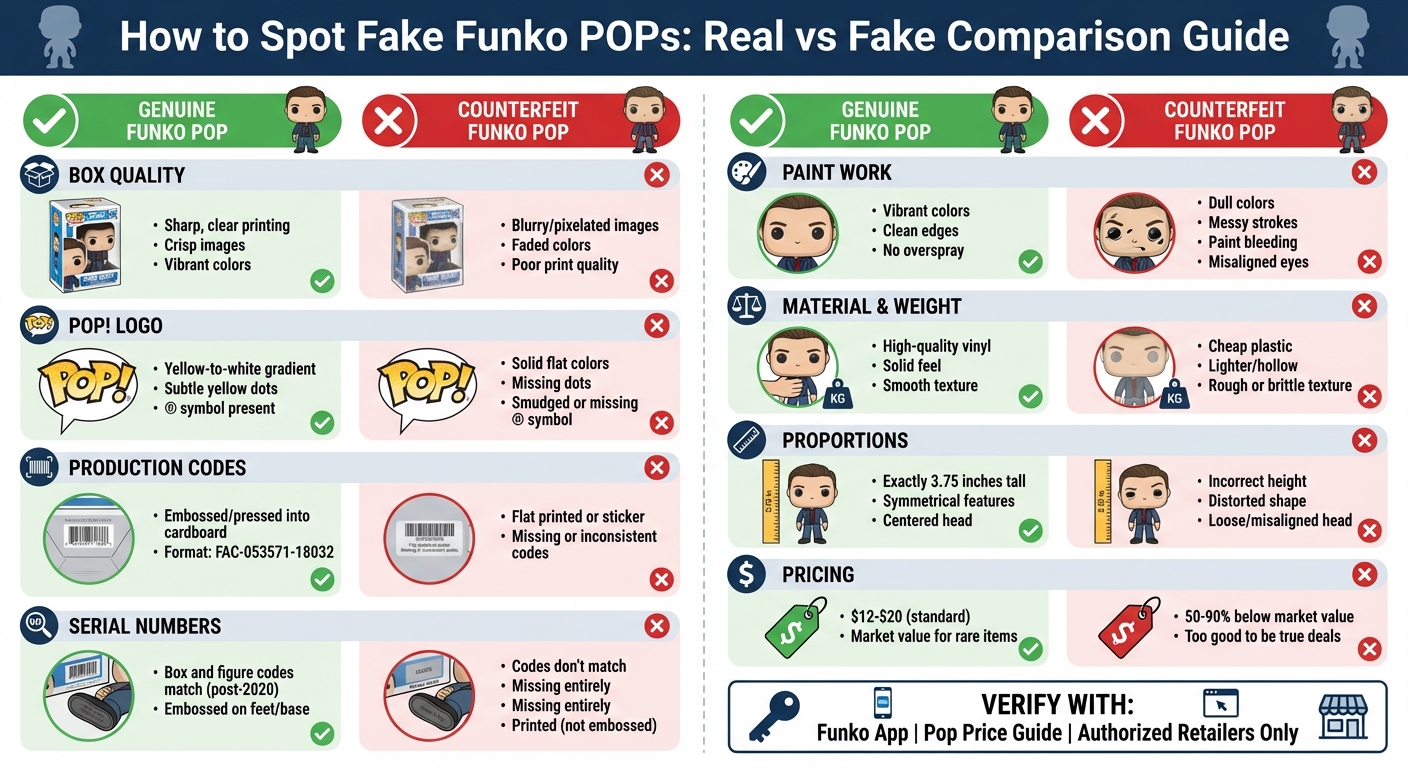
Real vs Fake Funko POP Comparison Guide
The Ultimate Guide To Spotting A Fake Funko Pop!
1. Check the Box Print Quality
The packaging of a genuine Funko POP! is known for its sharp, high-quality printing, resulting in clear and vibrant artwork. Counterfeit versions often skimp on materials and printing quality, leading to obvious flaws that can help you spot a fake right away. Carefully inspecting the box can save you from wasting money on a counterfeit.
Look for Blurry or Pixelated Images
Authentic Funko boxes showcase crisp, high-resolution graphics with clean lines, bold colors, and sharp details - everything from facial features to costume elements should look precise. On the other hand, counterfeit boxes frequently have blurry edges, pixelation, or faded colors that stand out as red flags.
Pay close attention to the "POP!" logo in the top-left corner of the box. On genuine packaging, this logo features a smooth gradient transitioning from yellow at the top to white at the bottom, with subtle light yellow dots scattered throughout. Use a magnifying glass or zoom in on photos - if the dots are missing or the gradient looks solid and flat, you’re likely dealing with a fake. The logo should also never appear smudged or unclear.
Another detail to check is the white border surrounding the character image on the box front. Authentic boxes have a thin, even border that’s perfectly aligned. Uneven borders, jagged edges, or poorly cut plastic windows are clear signs of a counterfeit.
Once you’ve checked the image clarity, move on to inspecting the printed text for additional signs of forgery.
Check for Spelling Errors and Logo Alignment
Small details often trip up counterfeiters. Look for misspelled character names, incorrect fonts, or awkward spacing between letters - these are common indicators of a fake. Carefully review all text on the box, including the character name, series information, and licensing details, to ensure everything is accurate and consistent.
Another key feature to confirm is the presence of the registered trademark symbol (®) next to the "POP!" logo in the top-left corner. If it’s missing, that’s a strong indicator of a counterfeit. Additionally, check the Funko logo printed on the bottom of the box - it should be clear and properly centered. Even the social media icons at the bottom need to be uniform in size and placement; any inconsistencies are a warning sign.
When shopping online, scrutinize the seller’s listing. As Funko Pop expert Anthony Malewich explains:
"A fake one may just have a flat paper look".
Listings with grammar or spelling mistakes can also hint at a scam. Always double-check these details before making a purchase.
2. Examine the Bottom Box Codes
Every genuine Funko POP! box features a production code stamped on the bottom. This code provides key manufacturing details, such as the factory, production date, and batch number. It’s one of the most dependable ways to verify authenticity, yet many buyers tend to overlook it. While the packaging artwork can help identify counterfeits, the production codes offer another layer of confirmation. After inspecting the visuals, take a closer look at these codes to ensure the item is authentic.
The main distinction between real and fake codes lies in how they’re applied. Authentic codes are pressed, embossed, or laser-etched directly into the cardboard, creating a textured feel. On the other hand, counterfeit codes often appear flat or are printed on a basic sticker. If the code feels smooth or is on a sticker that looks like it came from a standard label maker, it’s likely a fake.
For figures produced after 2020, the box’s serial number should match the code found on the figure itself - usually on the foot or base of the head. Funko Pop expert Anthony Malewich emphasizes:
"The serial number listed can also be verified through the Funko app. On fakes, this number may be missing or inconsistent".
If the codes on the box and figure don’t match, or if one is missing entirely, that’s a strong indication of a counterfeit.
Verify the Production Code Format
Authentic production codes follow specific alphanumeric patterns that counterfeiters often struggle to replicate. Common formats include three letters followed by a dash, six digits, another dash, and five digits (e.g., "FAC-053571-18032"). Shorter formats like "JJL 210525" are also used. These codes are typically located near the "Made in Vietnam" or "Made in China" markings, as these are the primary manufacturing countries for genuine Funko products.
The font quality and weight of the code are also important indicators. Authentic boxes feature crisp, clear typography, while counterfeit ones often use bold, blurry, or overly wide fonts. If there’s no serial number at all - whether printed, engraved, or on a factory sticker - it’s a definite fake. While older figures (pre-2020) may not always have matching codes between the box and the figure, the complete absence of any production code is never normal.
3. Match the Figure Codes
Once you've confirmed the box codes, it's time to examine the figure itself. Genuine Funko POPs have an embossed serial number - usually found on the bottom of the feet or the base of the figure. This detail is often missed by counterfeiters, making it a key point in your inspection process.
For figures released in 2020 or later, the serial numbers on the box and the figure should match. As Funko Pop expert Anthony Malewich points out:
"Fake Funkos lack matching serial numbers on the box and the figure".
For older releases before 2020, mismatched codes might not be unusual, but a missing code is still a warning sign.
When inspecting the figure, check for the "Funko LLC" logo near the production number, typically found on the feet or the figure's body. The code should follow the same alphanumeric format as the box code, often looking something like "JJL-210525". Authentic codes will always be embossed, not printed. You can confirm this by running your fingers over the code to feel the texture. This step works hand in hand with the box inspection to strengthen your authentication process before moving on to digital verification.
Cross-Reference with the Funko App
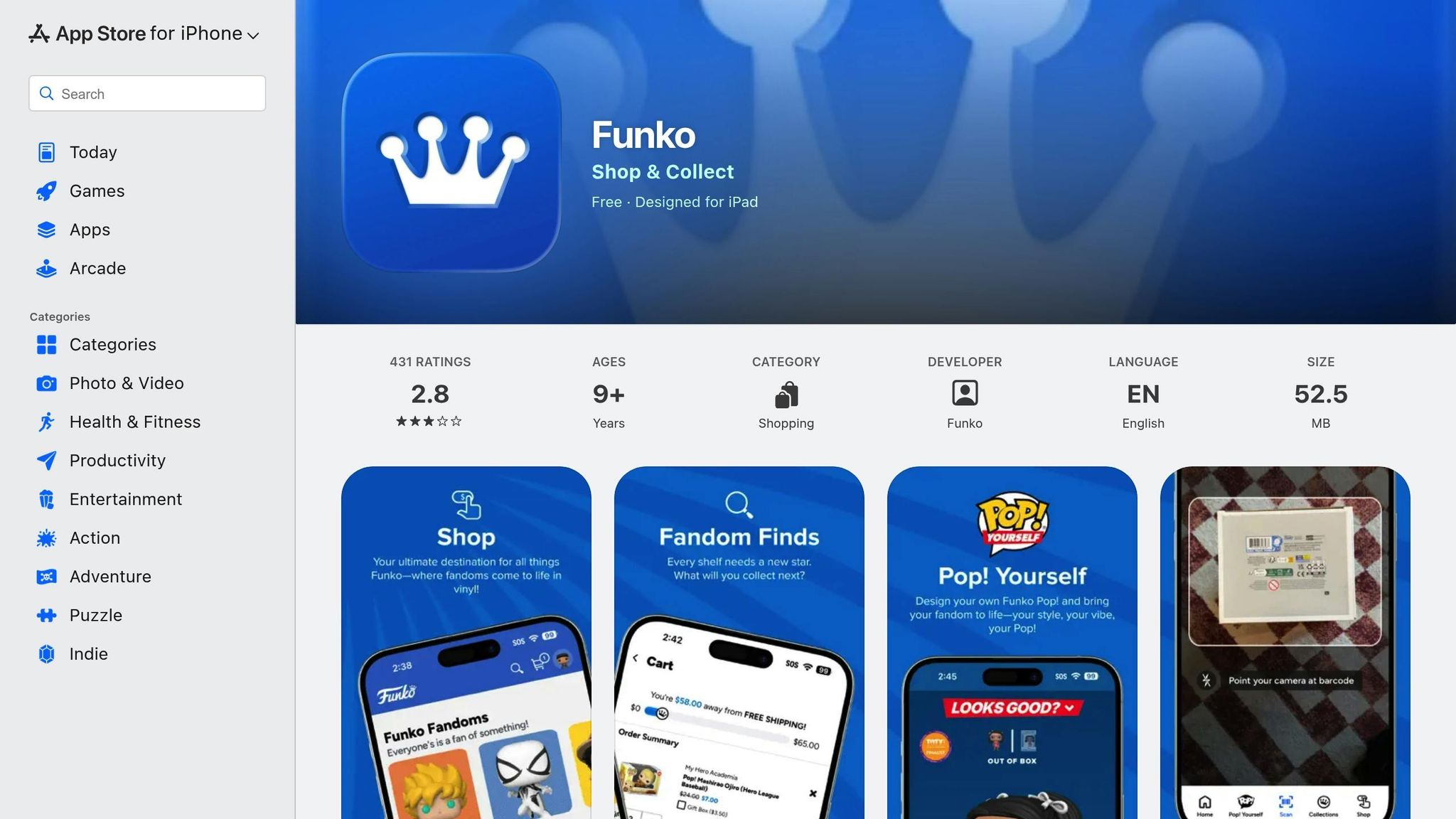
After confirming the figure's serial number, use digital tools to double-check its authenticity. The official Funko app allows you to scan the box's barcode or UPC to see if the item is listed in Funko's database. Funko Pop collector Katie Downey explains:
"If you scan the barcode on the Funko Pop's box and it doesn't authenticate, it will let you know, and you should further your investigation".
Keep in mind, though, that counterfeiters may copy UPC codes. So, while the app is a helpful tool, it should be used alongside your other checks. If the app scan doesn't authenticate the item or the details don't match what you're holding, it's a strong indicator the figure might be a fake.
4. Inspect the Paint and Detail Work
Once you've checked the codes, shift your attention to the figure's paint job - this is often where counterfeit products fall short. Authentic Funko POPs are known for their vivid, accurate colors that align perfectly with official character designs. If you notice dull or uneven colors, it's a strong indicator that the figure might be fake.
Pay close attention to the edges where colors meet. Genuine figures have clean, sharp lines with no paint bleeding or overspray. Counterfeits, on the other hand, often show imperfections like smeared edges or excess paint. As Toynk highlights:
"Authentic figures display: Vibrant, accurate colors that match official character designs; Clean edge definition between different paint zones; Professional finish without visible brush marks or overspray."
Spot Common Paint Flaws
Look out for signs of poor craftsmanship. Counterfeit figures frequently have sloppy paintwork, including visible brush strokes, smudges, or streaks. The eyes are a particularly telling feature - fakes often have misaligned or off-center eyes. Dexter Roona from Action Figure Geek emphasizes:
"Common areas where fakes fail include the eyes, logos, and intricate small details."
Also, check that any accessories or clothing match the official product photos. If you're dealing with a glow-in-the-dark figure, pay attention to how it glows. Genuine figures will have even glow distribution and the right intensity, while counterfeits tend to show patchy or inconsistent glow effects.
sbb-itb-9b27a27
5. Test the Material and Weight
Genuine Funko POP! figures are crafted from high-quality vinyl, which gives them a solid and sturdy feel. In contrast, counterfeit versions often use cheaper plastic, making them noticeably lighter or even hollow in some cases. This difference in material is an easy way to identify a fake if you know what to check.
Pick up the figure and assess its weight and overall feel. Dexter Roona from Action Figure Geek emphasizes:
"Authentic Pops are made from high-quality vinyl and have a consistent weight. If your figure feels too light or flimsy, it might be a counterfeit."
For the best results, compare the figure side-by-side with a verified authentic piece from the same series. Differences in weight and material density will be more apparent this way.
Compare Weight and Texture
The texture of the figure is another key indicator. Run your fingers across the surface, especially the bottom of the feet. Authentic vinyl feels smooth and dense, while counterfeit figures might feel lighter, rougher, or even brittle. Clara Davis from Alibaba Product Insights notes:
"Genuine Pops are molded from soft, durable vinyl with smooth edges and consistent weight. Fakes often feel lighter, grainier, or brittle due to lower-grade materials."
Pay close attention to the edges and seams. Authentic figures will have clean, smooth molding, while fakes may show leftover plastic or jagged edges, revealing poor craftsmanship. You can also lightly tap the figure; a hollow sound often points to thinner, cheaper material being used.
Once you've checked the weight and texture, move on to examining the figure’s proportions and design for further signs of authenticity.
6. Check the Proportions and Design
Once you've reviewed the print, codes, and craftsmanship, it's time to examine the proportions and design for subtle inconsistencies. Counterfeit Funko POPs often have noticeable flaws in their proportions, making them easier to identify if you know what to check. For example, authentic Funko POPs are always 3.75 inches tall, a measurement that remains consistent across standard releases. To confirm, compare the suspected figure side-by-side with a verified authentic POP to ensure the sizing matches.
Beyond height, take a close look at the figure's overall shape and molding. Genuine Funko POPs feature smooth edges and precise details, while counterfeits tend to have rough seams with visible plastic remnants. The shape might also appear slightly distorted, with intricate details missing when compared to the original.
Facial features are another giveaway. Authentic figures have symmetrical faces with carefully placed eyes, eyebrows, and mouths. If these elements seem off-center or uneven, you're likely dealing with a fake. Additionally, counterfeit figures often have dull or washed-out skin tones, lacking the vibrant colors of genuine releases.
Once you've confirmed the proportions are correct, shift your attention to the finer design elements.
Spot Design Errors
Accessories are a common area where counterfeiters cut corners. For example, authentic metallic accessories like helmets or weapons have a subtle, reflective finish, while fake versions often rely on overly shiny, cheap enamel paint that chips easily. Counterfeit accessories may also have incorrect proportions or simplified designs, deviating from the official look.
Another important detail to check is the head connection. Authentic Funko POPs have heads that are firmly and properly centered on the body. In contrast, counterfeit figures often have heads that feel loose or sit misaligned. If the head moves too freely or doesn't align correctly, it's a clear indicator of a fake.
7. Watch for Suspicious Pricing
Once you've checked the physical details and codes, it's time to take a close look at pricing. Price is often the biggest giveaway when it comes to spotting a fake. Standard Funko POPs generally sell for $12 to $20, while rare or vaulted figures can skyrocket into the hundreds or even thousands of dollars. The most sought-after collectibles have even fetched prices as high as $210,000. If you see a rare figure listed for a fraction of its actual market value, chances are you're looking at a counterfeit.
"If you're shopping online on sites such as eBay, and [the product] looks to be a price that's too good to be true, it probably is." - Brad Wells, YouTuber
Spotting Pricing Red Flags
Pricing discrepancies can be a strong indicator of a fake. Listings that are 35% below the usual market value - or, worse, 50% to 90% lower - should immediately raise suspicion. Counterfeiters often slash prices to sell their items quickly. To avoid falling for these traps, always cross-check the figure's price using reliable tools like the Pop Price Guide (PPG), the Funko App, or hobbyDB.
Another warning sign is sellers claiming to have large quantities of supposedly rare or limited-edition figures. Genuine rare Funko POPs are produced in limited numbers, so anyone claiming they "just found a box" of exclusives or has unlimited stock is likely dealing in replicas. Also, pay attention to the shipping location. Items shipped from counterfeit hotspots - particularly from China on auction sites - are almost always fake, with a 99.9% likelihood of being inauthentic.
Be Wary of Too-Good-to-Be-True Deals
Pricing isn't the only clue; seller behavior can also reveal a lot. Check the seller's account history, including feedback and the age of the account. Be cautious of new accounts or those without detailed, timestamped photos. Use eBay's "Sold" filter to see what collectors have actually paid for the figure recently, rather than relying on the prices of active listings.
To protect yourself, always use secure payment methods like PayPal Goods and Services, which offer refund protections if the item turns out to be fake. Avoid untraceable payment options such as Zelle, Cash App, or gift cards, especially when dealing with unverified sellers. If a seller refuses to provide additional photos or dodges questions about the figure's authenticity, it's best to walk away. It's not worth the risk.
Comparison Table: Real vs. Fake Funko POPs
Here's a handy table to help you distinguish between authentic and fake Funko POPs. Use it as a quick reference during your evaluations.
| Feature | Genuine Funko POP! | Counterfeit Funko POP! |
|---|---|---|
| Box Material | Thick, sturdy cardboard with a matte finish | Thin, flimsy material or overly glossy surface |
| Printing Quality | Crisp, vibrant images with sharp edges | Blurry, pixelated graphics or faded colors |
| POP! Logo | Yellow-to-white gradient with subtle yellow dots | Solid colors, smudgy text, or missing dots |
| Character Border | Thin, clean, and uniform white border | Thick, uneven, or off-center borders |
| Window Cutout | Smooth, rounded edges that fit snugly | Ragged, misaligned, or oversized cutouts |
| Serial Number (Box) | Pressed or embossed into the cardboard | Printed flat, missing, or added as a sticker |
| Serial Number (Figure) | Stamped on the foot or base (matches box after 2020) | Missing, inconsistent, or doesn’t match the box |
| Exclusive Stickers | Holographic or metallic with sharp text | Flat paper stickers with dull colors or misspellings |
| Trademark Symbol (®) | Found next to the "POP!" logo | Often missing or uses the wrong font |
| Material Quality | Durable vinyl with a smooth finish | Cheap plastic with rough texture or visible seams |
| Weight | Solid and substantial feel | Hollow, unusually light, or inconsistent weight |
| Paint Application | Clean lines and vibrant colors with no overlap | Messy strokes, smudges, or dull pigments |
| Height | Exactly 3.75 inches (9.525 cm) tall | May vary from standard height |
This table is a quick and practical tool for identifying fake Funko POPs, especially when you're inspecting in person or shopping online. Experts suggest that many counterfeits fail even the most basic packaging checks. If you notice two or more red flags from this list, it's safer to skip the purchase. Stick to these guidelines to ensure your collection stays authentic.
How to Protect Your Collection
To keep your collection safe, always buy from authorized retailers. Reliable sources like Funko.com, Hot Topic, GameStop, and Barnes & Noble ensure you're getting genuine products. These official dealers also offer clear return policies, unlike many third-party resellers. Another trusted option is Product Sage Collectibles, which not only provides authentic Funko POP! figures but also includes extras like free protectors and premium packaging to preserve your items in mint condition. Even when buying from these trusted sources, double-check the details to confirm authenticity.
If you're purchasing from third-party sellers, take extra precautions. Ask for high-resolution photos of all sides of the box, including close-ups of the figure's feet and any holographic seals. A short video showing the item's texture and weight can also help confirm its legitimacy. Be cautious of sellers who only use stock images instead of showing the actual product.
To verify authenticity, use the Funko App to check serial numbers and cross-reference them. Databases like Pop Price Guide or HobbyDB are also great tools for confirming market values and spotting known counterfeits.
When it comes to payment, protected methods like PayPal Goods & Services are your safest bet. Avoid risky options like wire transfers, gift cards, Zelle, Cash App, or PayPal "Friends & Family", as these offer little to no buyer protection. As YouTuber Brad Wells wisely notes:
"If you're shopping online on sites such as eBay, and [the product] looks to be a price that's too good to be true, it probably is."
Combining secure payment methods with thorough documentation can go a long way in protecting your investment.
Finally, don't underestimate the value of community expertise. Platforms like Reddit's r/FunkoPops and Facebook collector groups can offer helpful second opinions on questionable listings. Experienced collectors often spot warning signs that might escape your notice. For particularly valuable items, consider professional grading services, such as PSA, which charges $24.99 for authentication and tamper-proof encapsulation. These steps ensure your collection remains both authentic and well-preserved.
FAQs
What should I do if I think my Funko POP is fake?
If you think your Funko POP might not be genuine, start by closely inspecting the packaging and the figure itself. Pay attention to details like proper borders, licensing information, and serial numbers - fake boxes often have noticeable mistakes. For figures made after 2020, make sure the serial numbers on the box and the figure align.
Next, examine the figure's weight, texture, and paint job. Compare these features with authentic examples to spot any discrepancies. To avoid fakes altogether, it’s a good idea to purchase from trusted or authorized retailers.
Can the Funko app be wrong about authenticity?
The Funko app isn’t always 100% reliable when it comes to verifying authenticity. To be sure you're dealing with a genuine Funko POP! figure, take a closer look at other details. Check the packaging quality, inspect the paintwork for precision, and look for authenticity markings like serial numbers or unique stamps. These additional steps can help you confidently determine if your figure is the real deal or a counterfeit.
Are older Funko POPs less likely to have matching serial numbers?
Yes, older Funko POPs are less likely to feature matching serial numbers. The use of serial numbers as a reliable way to confirm authenticity has only become more standardized in recent years, so earlier releases often lack this feature.

